
Strategy
Good is not universal
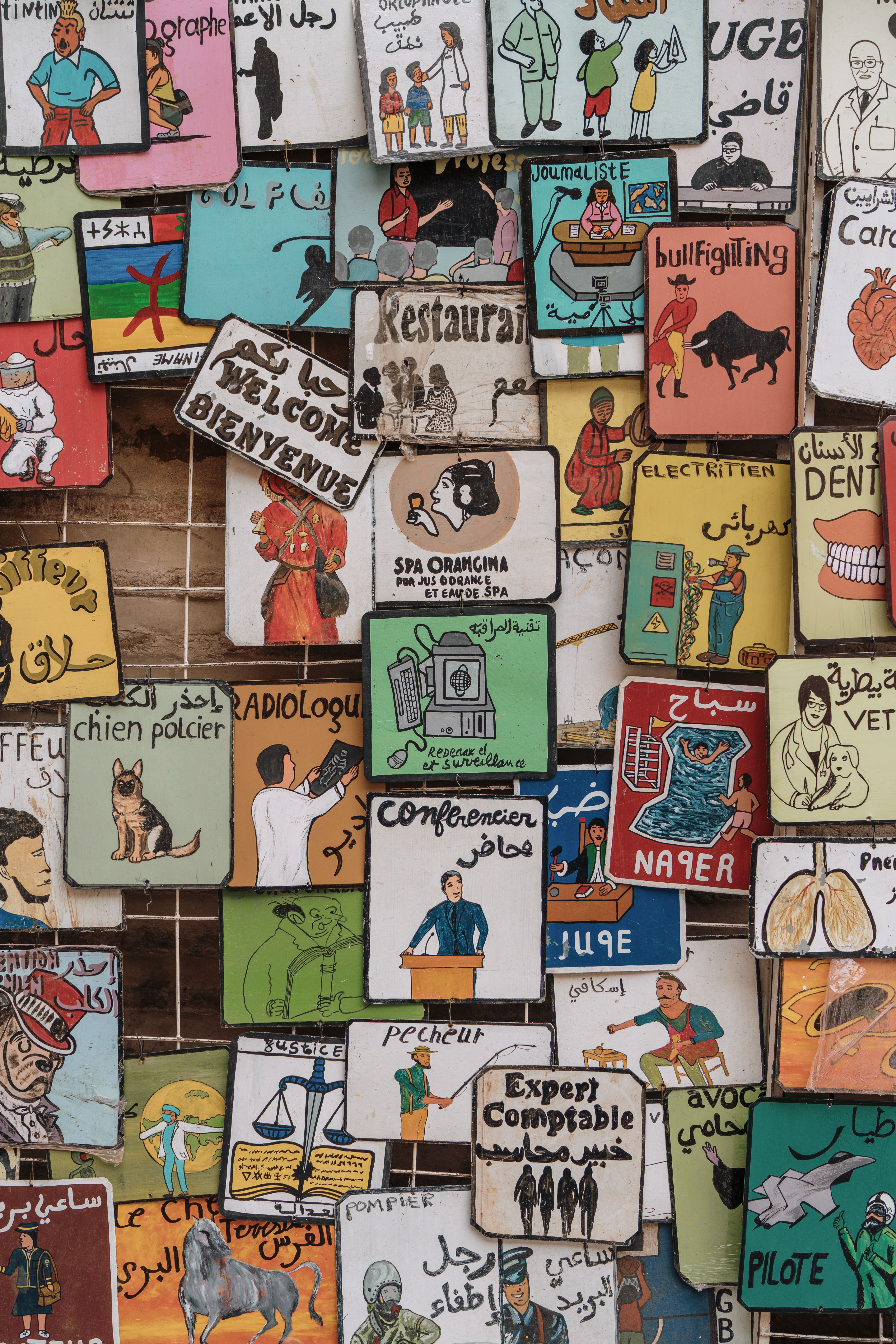
"Make it good" sounds like a clear brief. It isn't. Good is not a fixed point — it's a cultural agreement. The same website, the same pitch, the same handshake can read as trustworthy in one country and amateurish, even offensive, in another. If you're building for more than one market, "good" is the most dangerous word in the brief, because everyone in the room quietly assumes their own version of it.
We looked closely at three business cultures that routinely misread each other — Chinese, German and Arab — across two surfaces that decide whether you win the work: how each judges a partner, and what each expects from an interface.
The hidden variable: context
The anthropologist Edward Hall gave us the sharpest lens for this: high-context versus low-context cultures.
In a low-context culture like Germany, meaning lives in the words. You say what you mean, you write it down, and the contract is the relationship. Precision is respect.
In high-context cultures like China and the Arab world, meaning lives in the relationship, the history, and everything left unsaid. The relationship is the real contract; the paperwork just records it. Trust comes first, and terms follow trust.
Get this one variable backward and everything downstream — your deck, your homepage, your follow-up email — lands wrong, no matter how polished it is.
Choosing a partner: three different questions
The German client is asking: are you competent and reliable?
German business culture prizes directness, punctuality and thoroughness. Decisions are methodical and evidence-driven, built on careful preparation. They assess technical depth, references, financial stability and documented process — and they read punctuality itself as a proxy for reliability. Trust is earned through consistency, not charisma. Crucially, they prefer concrete evidence and realistic commitments over polished marketing language. Over-promise, gloss over the detail, or show up five minutes late, and you've already lost them.
The Chinese client is asking: do I know you, and can I trust you?
Here the operative word is guanxi — the web of reciprocal relationships and mutual obligation that business runs on, built slowly through reliability and face-to-face ritual. Alongside it sits mianzi, or "face": social dignity and reputation you must protect, never causing anyone to lose it. Decision-makers consistently prefer to do business with people they know and feel connected to over strangers offering better terms. Rushing to the deal before the relationship exists is a classic, expensive error. The relationship is the product; the terms come later.
The Arab client is asking: are you someone I want a relationship with?
In Gulf and wider Arab business culture, the relationship isn't a precursor to business — it is the business. Wasta, the network of connections, means a warm introduction from a mutual contact is worth far more than the strongest cold approach. Hospitality — the coffee, the dates, the questions about your family and your journey — is not small talk to endure before the agenda. In a real sense, it is the meeting. Trust has to exist at the personal level before any deal unfolds; historically, a business partner was expected to also be a friend.
Same company, three completely different pitches. In Germany: the spec sheet, the references, the precise timeline. In China: the dinners, the patience, a trusted introduction, and scrupulous care for everyone's face. In the Arab world: presence, warmth, hospitality, and a mutual connection who vouches for you. Send the German pitch to the Arab client and you read as cold and transactional. Send the Arab approach to the German and you read as evasive, all relationship and no substance.
The same split shows up on the screen
Germany: minimal, linear, evidenced. German users tend to read thoroughly and linearly before acting, wanting supporting detail, specs and proof before the call to action, and their privacy respected throughout. A loud, one-CTA hero that converts in the US can feel untrustworthy here — where's the substance behind the promise?
China: dense, layered, alive. Chinese interfaces favour data-dense layouts — many banners, entry points, notifications and layered navigation. What a Western designer calls "cluttered," a Chinese user often reads as rich, active and trustworthy. Look at Taobao or WeChat next to a typical Western landing page. An airy, minimalist page with one button and a lot of whitespace can read as thin, or even suspicious — as though the business has nothing going on.
Arab world: right-to-left, and it's not just a flip. Arabic reads right-to-left, which mirrors the entire layout: text alignment, navigation order, directional icons, the reading flow itself. It's a rebuild, not a stylesheet toggle. Green carries positive and religious significance, gold reads as premium and luxurious, and imagery norms matter. Bolt on a mirrored CSS file and call it localised, and every native user will feel the difference.
Colour and symbols carry local charge
Red means luck and prosperity in China and danger or caution across much of the West — the exact same colour, opposite signals. Green resonates religiously and positively in the Arab world. Gold signals luxury in a UI. Numbers, imagery and gestures all carry meaning that doesn't travel. "Good taste" in colour is local, never universal.
So what do you actually do with this?
You don't need to be a native of every market. You need to drop the one assumption that quietly wrecks global work: that your good is the good.
- Assume difference. Your instinct for good is your culture's instinct, not a law of nature.
- Research before you design or pitch, not after. This article is the result of research; do the same for the market you're entering.
- Localise the meaning, not just the words. Translation is not localisation. Density, directness, hierarchy and colour all have to move too.
- Get a local read. One honest conversation with someone from the market beats ten confident assumptions in a meeting room.
- Leave room to flex. Build so the balance of relationship versus evidence, and the density versus the whitespace, can change per market without a full rebuild.
The best global work doesn't hunt for one "good" that pleases everyone — that only ever produces beige. It respects that good is plural, and does the work to learn what it means here, for these people. Good is not universal. Neither should your design, or your pitch, pretend to be.